Raw Materials for Detergents
Sodium Carboxymethyl Cellulose (CMC) – Detergent Grade
Sodium Carboxymethyl Cellulose (CMC) in Detergent Grade is a cellulose derivative widely used in the production of detergents and cleaning products. It acts as a thickening agent and helps in suspending particles.
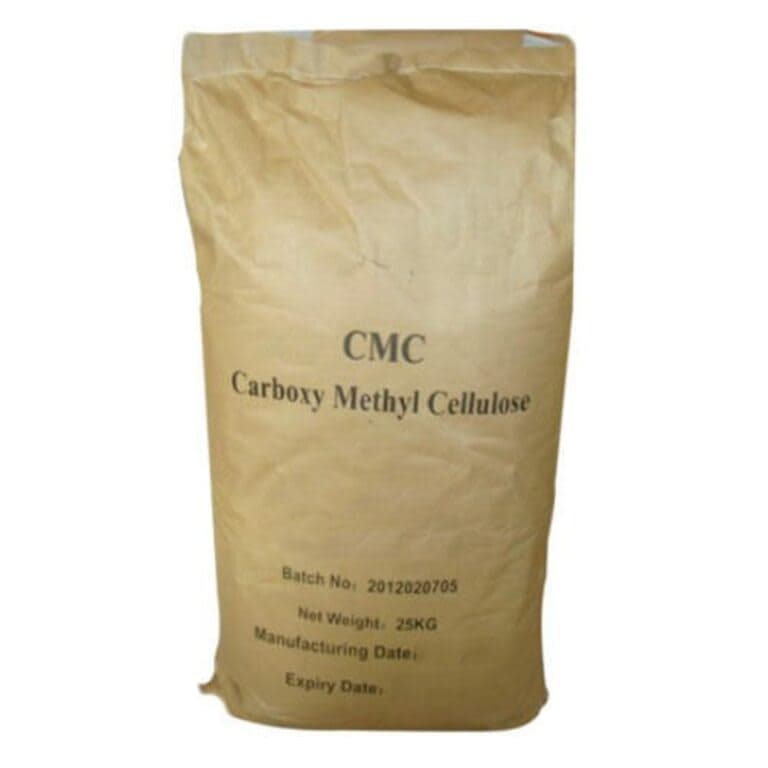
Product information summary
- Description
- Sodium Carboxymethyl Cellulose (CMC) in Detergent Grade is a cellulose derivative widely used in the production of detergents and cleaning products. It acts as a thickening agent and helps in suspending particles.
- Main application
- The primary application is in detergent, soap, and cleaning-product manufacturing.
- Packaging
- Typically available in bags or drums.
Also known as
CMC Detergent Grade
Part of Raw Materials for Detergents. Tell us the grade, quantity and packaging you need and our sales team will confirm availability and lead time.
Why Sodium Carboxymethyl Cellulose (CMC) – Detergent Grade matters
Sodium Carboxymethyl Cellulose is essential for improving the texture and effectiveness of cleaning products, making them more efficient in removing dirt and stains. Its use enhances product stability and performance, crucial for consumer satisfaction in the detergent industry.
What is Sodium Carboxymethyl Cellulose (CMC) – Detergent Grade?
Sodium Carboxymethyl Cellulose (CMC) is a cellulose ether derived from the natural polymer cellulose through carboxymethylation. It is water-soluble and exhibits unique thickening, binding, and stabilising properties, making it suitable for various industrial applications. CMC is biocompatible, non-toxic, and is primarily used as a rheology modifier in formulations.
Types of Sodium Carboxymethyl Cellulose (CMC) – Detergent Grade
- Detergent Grade
- This grade is specifically formulated for use in detergents, providing necessary viscosity and stability.
Why buy Sodium Carboxymethyl Cellulose (CMC) – Detergent Grade from Cuprichem
- Technical support for formulation matching and usage guidance is readily available.
- We ensure reliable supply chain management for consistent product availability.
- Local delivery in Kenya facilitates quick access to necessary materials.
Technical data sheet
Indicative properties for Sodium Carboxymethyl Cellulose (CMC) – Detergent Grade. For a certified specification and the Safety Data Sheet, request a quote.
| Appearance | White to off-white powder |
|---|---|
| pH (1% solution) | 6.0 - 8.0 |
| Solubility | Soluble in water |
| Density | Refer to the SDS |
| Viscosity | Refer to the SDS |
| Thickening Efficiency | Refer to the SDS |
| Odour | Odourless |
| Stability | Stable under recommended storage conditions. |
Applications of Sodium Carboxymethyl Cellulose (CMC) – Detergent Grade
- Thickening agent in liquid detergents
- Suspending agent in powdered detergents
- Stabiliser in liquid soaps
- Enhancing texture in cleaning products
- Source of viscosity in fabric softeners
- Emulsifier in cleaning formulations
- Improving shelf life of formulations
- Binding agent in tablet detergents.
Packaging & pricing
Pack sizes for Sodium Carboxymethyl Cellulose (CMC) – Detergent Grade are confirmed at the point of quotation. Contact Cuprichem for specifications and availability.
Other packaging described for this product
- 25 kg bag
- 200 kg drum
Safe handling & storage of Sodium Carboxymethyl Cellulose (CMC) – Detergent Grade
For handling and storage information, please refer to the Safety Data Sheet and consult Cuprichem's technical team for authoritative guidance.
This is general information only. Always follow the product’s Safety Data Sheet and your site’s procedures; contact our technical team for guidance specific to your process.
Quality assurance of Sodium Carboxymethyl Cellulose (CMC) – Detergent Grade
Cuprichem is committed to supplying material that complies with specifications provided by customers, with documentation available on request.
Frequently asked questions
What is Sodium Carboxymethyl Cellulose used for?
It is primarily used as a thickening agent and stabiliser in the formulation of detergents and cleaning products.
Is CMC safe to use in cleaning products?
Yes, Sodium Carboxymethyl Cellulose is biocompatible and non-toxic, making it safe for use in cleaning formulations.
How should CMC be stored?
It should be stored in a cool, dry place, away from moisture and incompatible substances.
Can I use CMC in food products?
This specific grade is intended for detergent formulations; food-grade CMC is available separately.
What is the typical viscosity range of CMC in solutions?
Viscosity can vary significantly depending on the formulation; refer to the product specifications.
How does CMC improve the performance of detergents?
CMC increases the viscosity and stability of formulations, allowing for better dispersion and suspension of cleaning agents.
What is the solubility of CMC?
Sodium Carboxymethyl Cellulose is soluble in water, forming a gel-like viscosity.
How does CMC affect the environmental profile of cleaning products?
As a natural cellulose derivative, CMC is biodegradable and contributes to more environmentally friendly cleaning formulations.
Related categories
Sodium Carboxymethyl Cellulose (CMC) – Detergent Grade supply across Kenya
Cuprichem Industrial Chemicals Ltd supplies Sodium Carboxymethyl Cellulose (CMC) – Detergent Grade to manufacturers, institutions and laboratories nationwide, delivering to:
- Nairobi
- Mombasa
- Kisumu
- Nakuru
- Eldoret
- Thika
- Ruiru
- Kikuyu
- Naivasha
- Machakos
- Athi River
- Kitengela
- Nyeri
- Meru
- Kericho
- Kakamega
- Kisii
- Malindi
- Nanyuki
- Kilifi
Not listed? We arrange delivery to other towns on request.
Need Sodium Carboxymethyl Cellulose (CMC) – Detergent Grade?
Send your grade, quantity and packaging requirements and our sales team will respond with availability, pricing and lead time.